Oppenheimer at Home: Editorial Review, Dialogue Clarity Fixes & 3-Hour Pacing Verdict
By Awais K • Editorial Guide • Updated November 21, 2026
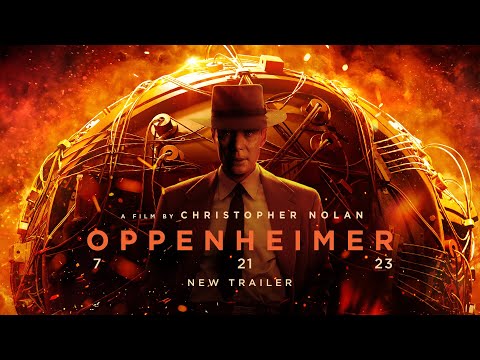
Does a 70mm IMAX Historical Epic Hold Up on a Living-Room TV?
Viewer Question Answered: "I missed Oppenheimer in IMAX theaters—is a three-hour biographical drama about physicists and security hearings actually gripping on a home screen, or does it drag?"
Key Details: Released July 2023 • Runtime: 180 minutes • Director & Writer: Christopher Nolan • Adapted from American Prometheus by Kai Bird & Martin J. Sherwin • 7 Academy Awards (including Best Picture, Best Director, Best Actor for Cillian Murphy, Best Supporting Actor for Robert Downey Jr.) • Open Title Details & Trailer →
Our Short Verdict: Surprisingly, Oppenheimer translates to home viewing even better than most spectacle blockbusters. Yes, the Trinity test and stomping auditorium sequence roar on massive speakers—but at its core, Nolan built a high-velocity psychological thriller out of human close-ups, whispered betrayals, and frantic courtroom-style cross-examinations. Those intense faces look razor-sharp on a living-room screen.
Why Three Hours Feel Like Two: Editing as Adrenaline
Most prestige historical biopics suffer from polite, predictable pacing: childhood montage, breakthrough speech, solemn sunset credits. Nolan rips up that template by structuring Oppenheimer like a ticking-clock heist film cut in two colliding timelines:
- Color ("Fission"): Subjective scenes seen strictly from J. Robert Oppenheimer's perspective—tracking his European physics breakthroughs, the race to build Los Alamos, and the closed-door 1954 security clearance tribunal.
- Black-and-White ("Fusion"): Objective scenes focused on Lewis Strauss (Robert Downey Jr.) during his 1959 Senate confirmation hearing, slowly revealing a petty bureaucratic grudge with devastating national consequences.
Editor Jennifer Lame and composer Ludwig Göransson turn dry academic chalkboards and security questionnaires into relentless forward momentum. Göransson's restless solo violin theme ("Can You Hear the Music") speeds up and slows down like subatomic particles, turning the entire first hour into a breathless montage where you barely notice 60 minutes vanishing.
Honest Limitations: Who Might Bounce Off It?
A fair review should tell you clearly when not to press play:
- Zero Second-Screen Forgiveness: More than thirty real historical scientists, generals, and politicians cycle rapidly through the first 45 minutes. If you glance at your phone for two minutes, you will lose track of who betrayed whom in Act 3.
- Act 3 Is a Dialogue Courtroom Battle, Not a War Movie: Viewers expecting the Trinity detonation to serve as the ending are often surprised when an entire gripping hour follows—focused on McCarthy-era paranoia, marital fallout, and political backstabbing.
- Sparse Breathing Room: Because music scores nearly the whole movie like a three-hour trailer, viewers sensitive to nonstop sonic intensity may appreciate pausing briefly right after the Trinity sequence (around the 2-hour mark) for a five-minute intermission.
Fixing Christopher Nolan's Dialogue Mix at Home
Like Tenet and Interstellar, Oppenheimer was mixed with wide theatrical dynamic range: whispers sit very low while shockwaves and orchestral swells hit thunderous peaks. On built-in TV speakers, that often leaves you juggling the volume remote every five minutes. Before pressing play, apply these quick adjustments:
- Enable "Night Mode" or "Dialogue Enhancer" on your TV or soundbar: This compresses extreme volume spikes so thunderous music cues stop drowning out fast spoken exchanges.
- Switch from 5.1 Surround to Stereo if you only use TV speakers: Letting a streaming app force a 5.1 center-channel track down into two flat TV speakers frequently buries voices. Selecting the
English (Stereo)audio track often clarifies dialogue immediately. - Turn on English Subtitles: With dozens of historical surnames (Teller, Bohr, Lawrence, Pash, Borden, Strauss) flying past at rapid speed, clean subtitles boost comprehension dramatically without breaking immersion.
Standout Performances & Visual Craft on a Home Screen
What stays with you weeks after watching Oppenheimer at home isn't just the blinding white flash of the desert test—it is how much tension cinematographer Hoyte van Hoytema extracts from human faces photographed inches away on 65mm film. Cillian Murphy carries almost every scene with startling physical stillness, allowing quiet flickers of pride, exhaustion, and dread to register across his eyes without big speeches.
Equally transformative is Robert Downey Jr. as Atomic Energy Commission chairman Lewis Strauss. Stripping away a decade of charismatic quips, Downey Jr. plays bureaucratic insecurity with chilling precision—making the black-and-white 1959 Senate scenes feel like a slow-motion psychological ambush. Even minor supporting roles (Matt Damon as brusque General Leslie Groves, Jason Clarke as relentless interrogator Roger Robb, and Emily Blunt in a ferocious late hearing scene) give every confrontation sharp dramatic stakes.
| Viewing Scenario | Recommendation | Why |
|---|---|---|
| Focused Friday/Saturday evening | Strong Yes | 3-hour runtime flies when watched uninterrupted |
| Late weeknight after 10 PM | Wait or split at 2h mark | Dense names & fast editing reward a rested mind |
| Laptop with headphones | Surprisingly Good | Close-ups & stereo mix keep dialogue crisp |
What to Watch Next If Oppenheimer Hooked You
- Chernobyl (2019 Miniseries): The closest spiritual companion ever made—pairing nuclear physics terror with devastating bureaucratic cover-ups. Featured in our 8 Weekend-Binge Limited Series Guide.
- The Social Network (2010): Another dual-timeline biography framed around bitter legal depositions and brilliant, deeply flawed ambition. Check streaming →
- Spotlight (2015) & Michael Clayton (2007): If Act 3's interrogation rooms were your favorite part, explore our 7 Gripping Courtroom & Legal Thrillers.
- Dune: Part Two (2024): Want another massive modern IMAX epic evaluated for living-room audio and dark-scene contrast? Read our Dune: Part Two Home Setup Review.